Lestedo
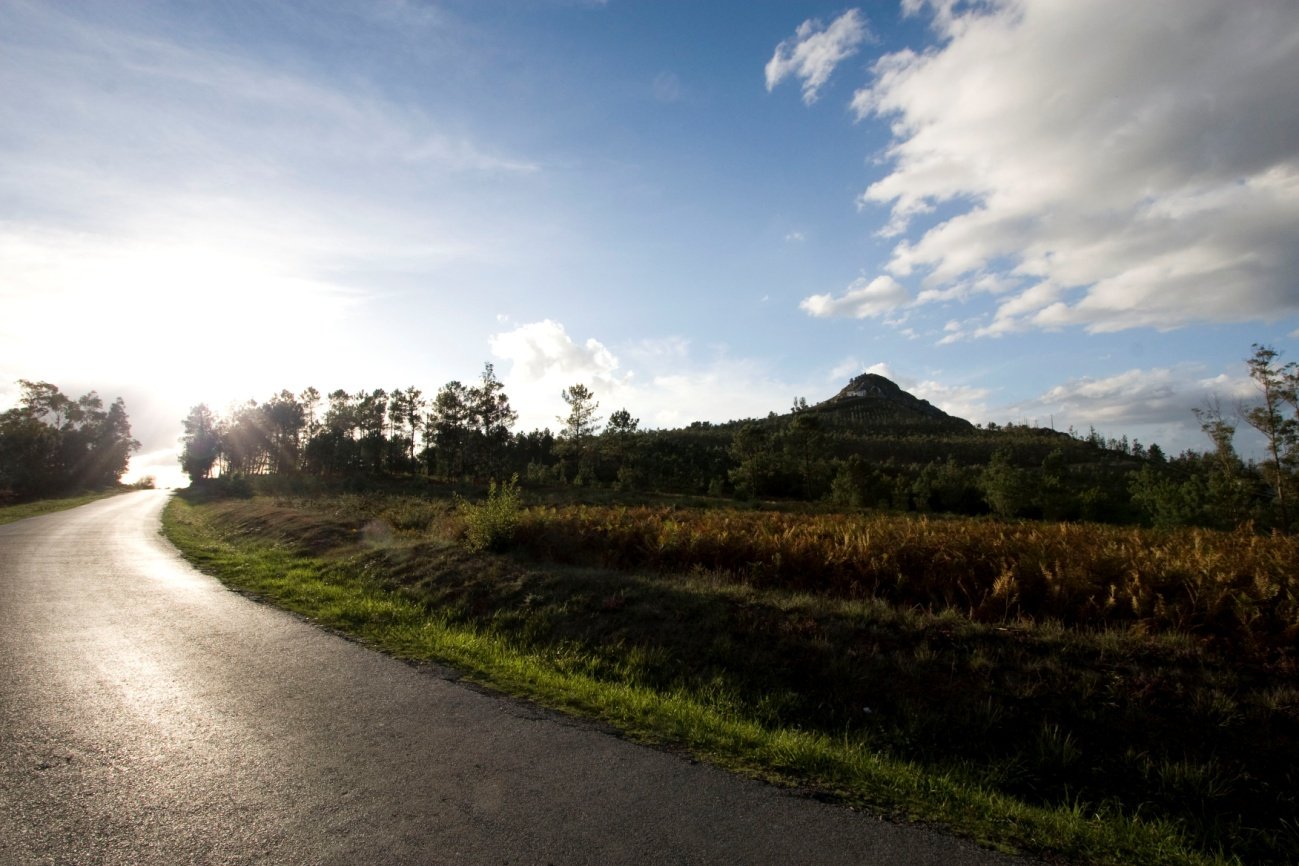
This parish lies on the south-western slope of Pico Sacro and is crossed by the N-525 Santiago–Ourense road. Sheltered from the north, it is a very fertile land dominated by farming and livestock. Trade, hospitality, textiles and construction are growing fast. For more than fifty years the parish has been home to the Guardia Civil station that covers the municipalities of Boqueixón and Vedra. Its 6.5 km² are home to 1,040 people, spread across the following settlements: Ardarís, Cachosenande, Cusanca, Lestedo, Milleirós, Pazos, A Picota, Ramil, Rubial, Troitomil and Vilar.
Parish church of Santa María de Lestedo
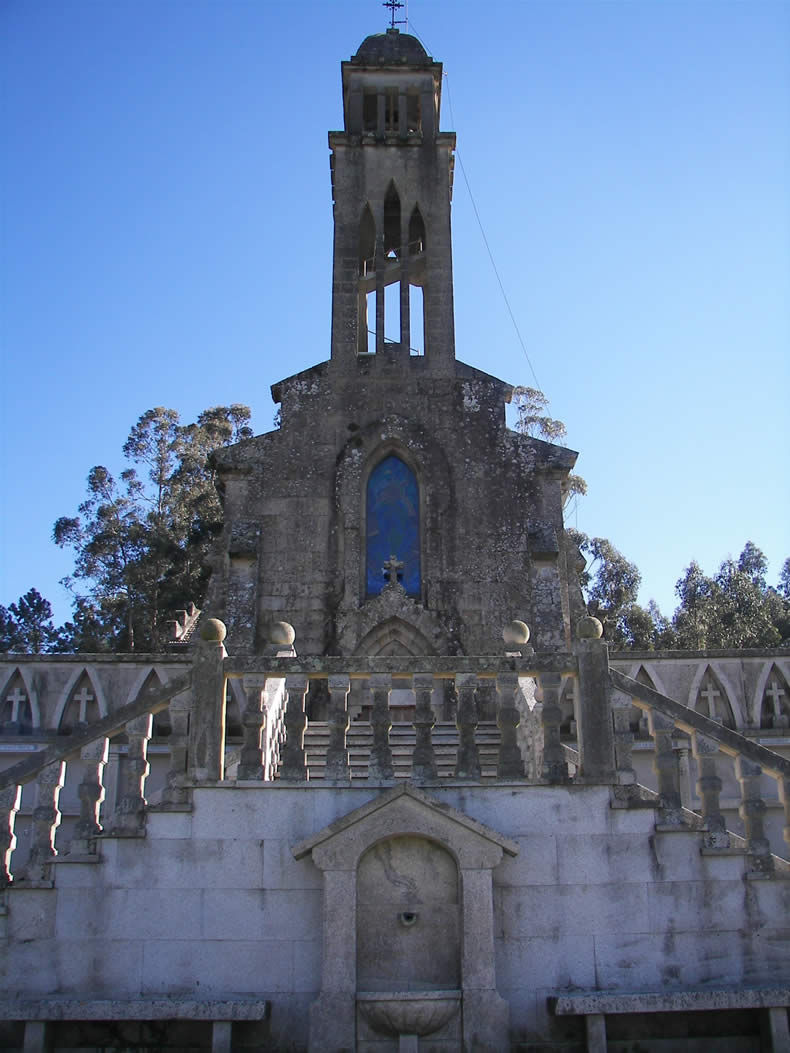
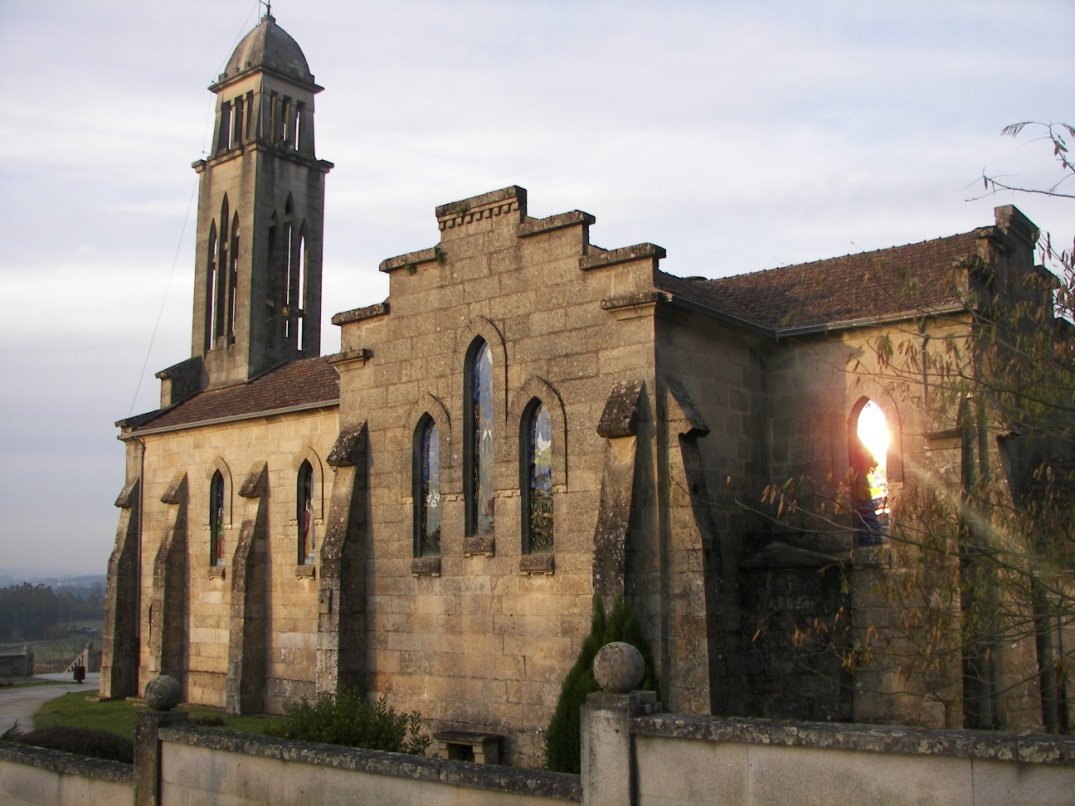
The old parish church stood in Rubial. It was a small Romanesque building whose condition and need for rebuilding led to the decision to build a new one at the beginning of the last century. Work began on 2 June 1915, closely following the plans of the Compostela architect Jesús López de Rego. The building, with a Latin-cross plan and large stained-glass windows, is Neo-Gothic, a style that returned to ideal models of the past in search of constructive perfection, combining stone and glass. The church stands out for its marked verticality and great height, and for its buttresses, pointed arches, tall pillars, rib vaults and the tower on its façade.
The tower was only completed in 1990, after more than five decades of abandoned works. In 2005 new coloured stained-glass windows, with religious imagery related to the parish, replaced the old plain glass.
· Altarpieces: main altarpiece, altarpiece of Our Lady of Mount Carmel and altarpiece of San Roque.
· Statues: Assumption of Mary, Sacred Heart of Jesus, San Blas, St Joseph, St John the Baptist, St Anthony of Padua, St Peter Nolasco, Our Lady of Mercy, St Raymond Nonnatus, St Serapion, Immaculate Conception, Christ Crucified, Our Lady of Mount Carmel, Christ tied to the column, Our Lady of Sorrows, San Roque and the Guardian Angel.
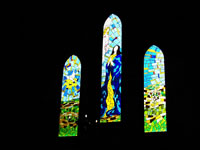
Some of the stained-glass windows of Lestedo parish church, unveiled in 2005
Chapel of Our Lady of Lourdes
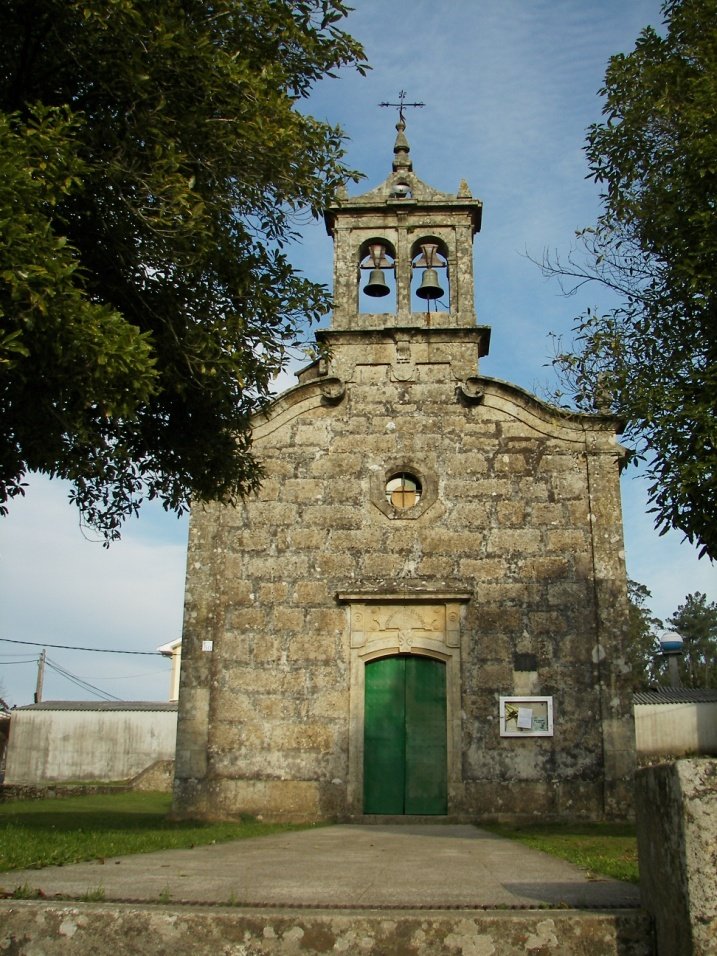
Construction of this chapel on the fairground began in 1883, making it easier to attend religious services on market days, as the parish church was far away. Both its single-nave interior and its façade, with a simple round window and bell gable, follow the plain classical lines of 19th-century historicism.
· Altarpiece: main altarpiece.
· Statues: Our Lady of Lourdes, Immaculate Conception, St Francis of Assisi, St Margaret, St Anthony of Padua, St Sebastian and St Joseph.
Lestedo fairground, where a busy market fair is held on the first and third Sunday of every month
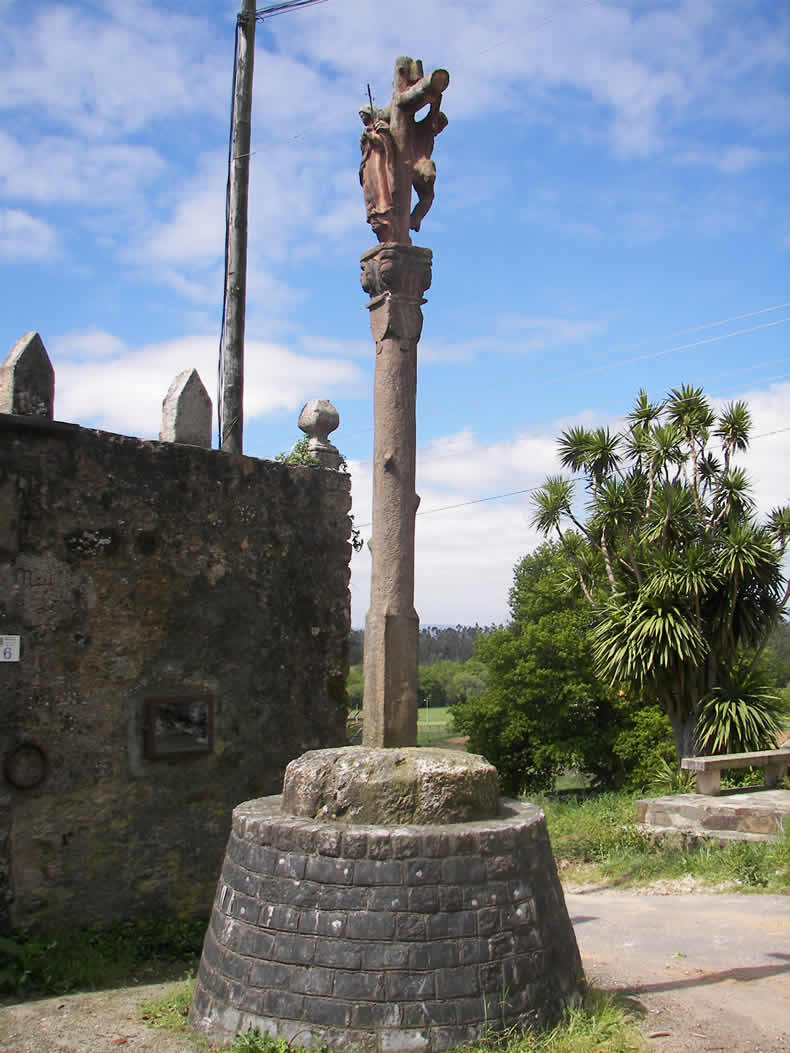
Rubial wayside cross
It stands on private land. A truncated-cone rubble platform with a round pedestal and shaft. Square capital with winged angels’ heads and a round, knotted, tree-trunk-style cross. On the front, Christ crucified; on the back, Our Lady of Sorrows. All in granite.
Pazos wayside cross
Made of granite, it has a square platform and a pentagonal pedestal with a skull and crossbones. Round, knotted, tree-trunk-style shaft and cross. Square capital with chamfered corners, angels’ heads and symbols of the Passion. On the front, Christ crucified; on the back, Our Lady of Sorrows.
Fairground wayside cross
Made of granite, it has a square cross with figures of Christ and the Virgin at prayer. Corinthian capital with winged angels’ heads. Octagonal moulded shaft and pedestal bearing the inscription 1907.
Castrelo wayside cross
Square platform and cubic pedestal topped with a torus moulding. Round, knotted, tree-trunk-style cross resting on an octagonal shaft and a moulded square capital. On the front, Christ crucified; on the back, Our Lady of Sorrows. All in granite.
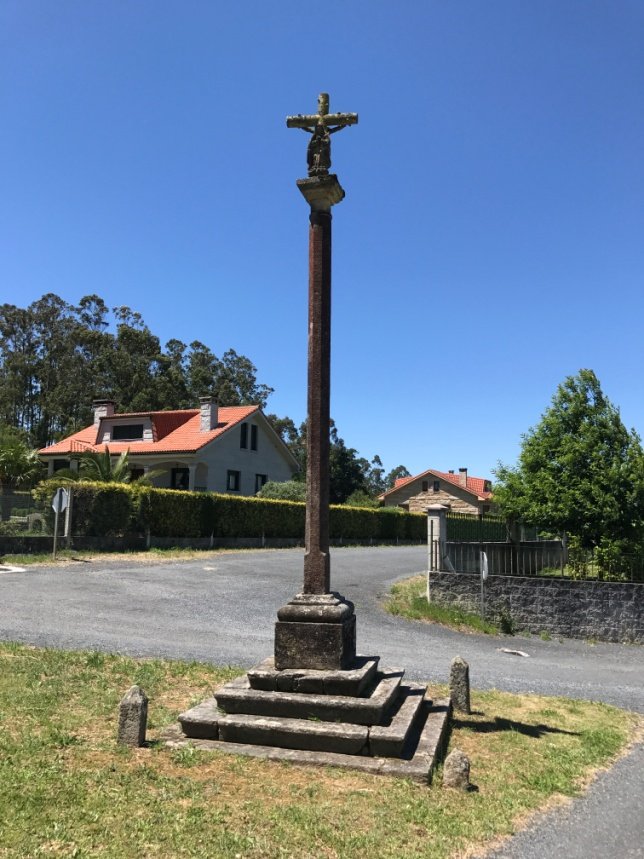
Pazos wayside cross
Made of granite, it has a round, knotted, tree-trunk-style cross with figures of Christ and the Virgin at prayer; a square capital with winged angels’ heads and symbols of the Passion (hammer, pincers, spears…); a round, knotted shaft; and a pentagonal base carved with a skull and crossbones, standing on three square steps.
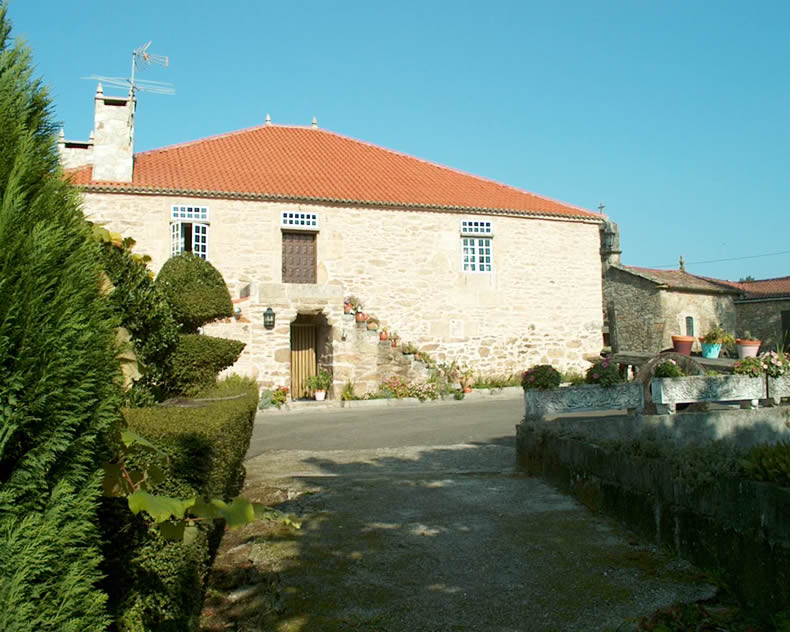
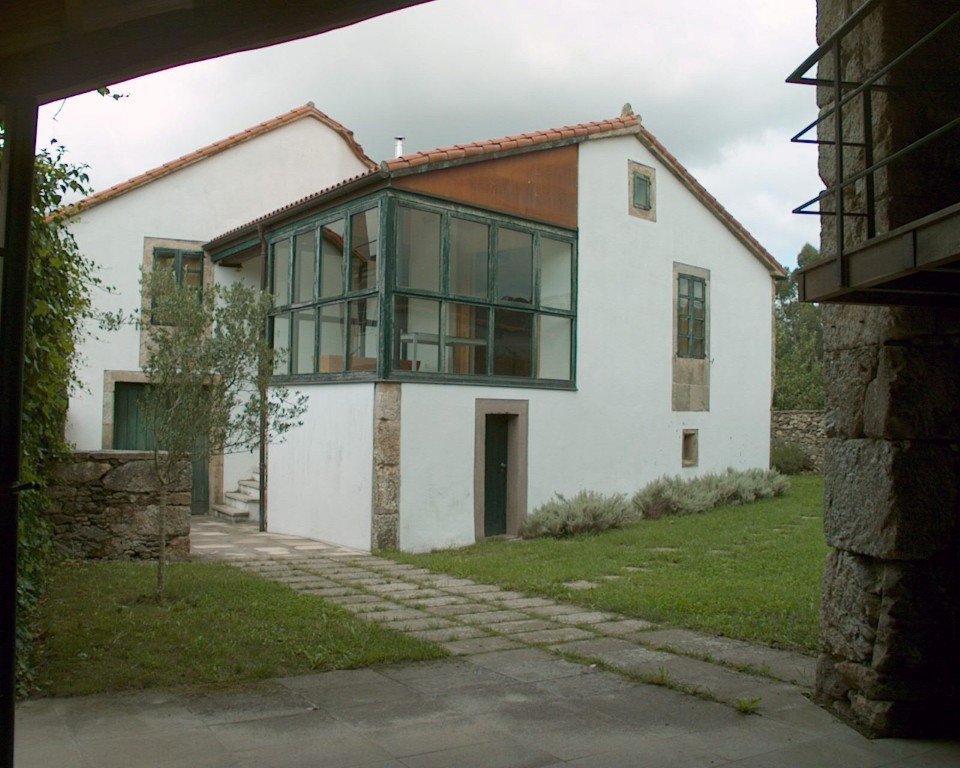
Pazo de Ramil (manor house)
The River Pontillón forms this waterfall as it passes the village of Ramil, in the middle of a lush and interesting riverside wood.
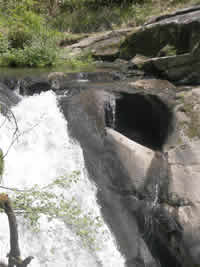
Spectacular waterfall formed by the River Pereiro as it passes Ramil
Pico Sacro Visitor Centre
It stands at the foot of Pico Sacro, in the village of Cachosenande, a few metres from the Vía de la Plata. The centre introduces every aspect of the mountain: history, legends, geology… It was refurbished in 2008 and now has information panels, a photography exhibition room and another room with a scale model and a video about the culture of the area and the meaning of Pico Sacro.
Pico Sacro
Pico Sacro lies in the municipality of Boqueixón, between the parishes of Lestedo and A Granxa.
At 530 metres above sea level, it offers one of the widest panoramic views in Galicia.
Pico Sacro, the “Sacred Mountain”, is perhaps the place in Galicia with the most stories, real, mythological and legendary, and one of its most iconic and best-known mountains. Rising proudly over the valleys of the middle Ulla and the source of countless legends and folk tales, it was revered by local people before and after Christianity, and plays a key part in the legend of the transfer of the body of St James the Apostle.