Sergude
The largest parish, at 9.4 km2, with 808 inhabitants. It lies on the north-eastern slope of Pico Sacro, forming a small valley around the River Pereiro. Its fertile land is used for meadows and crops. It is well connected to the Galician capital by the N-525 and the AC-960 Santiago–Vila de Cruces road. It has twelve settlements: Deseiro de Abaixo, Deseiro de Arriba, A Eirexe, Gándara, Lamas, Mareque, Noenlle, Pumares, Quián, Rodiño Grande, Rodiño Pequeno and Vilar.
Parish church of San Breixo de Sergude
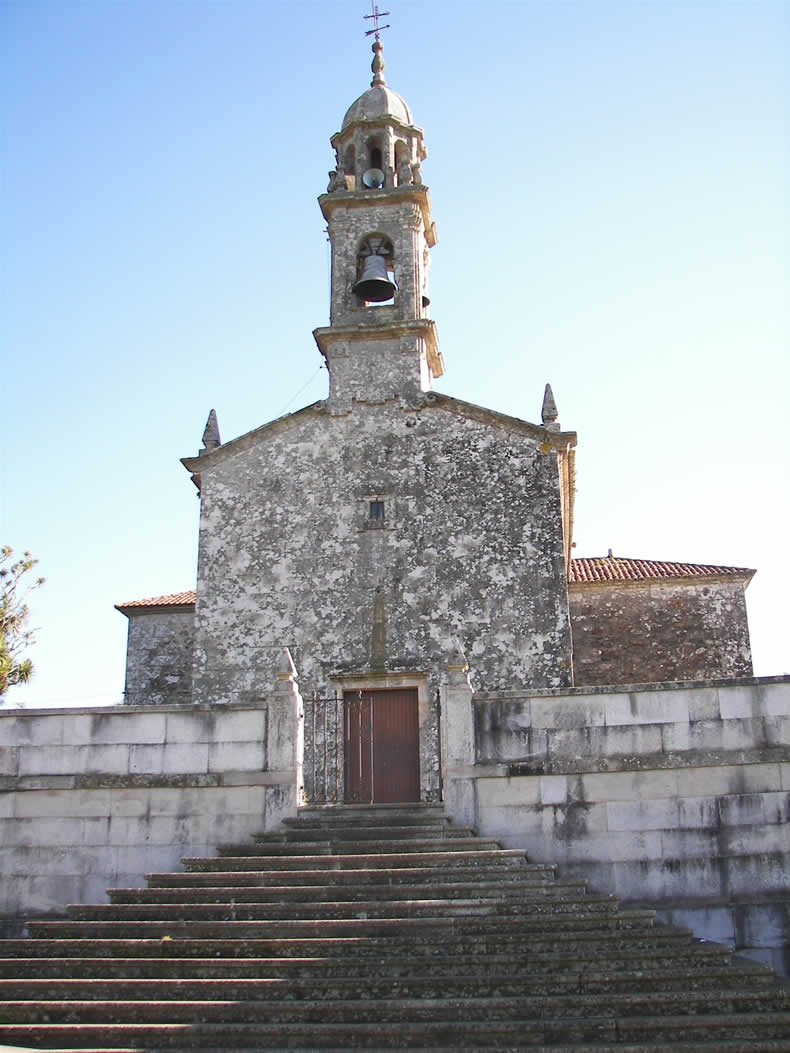
The first documentary references to this church, from 1632, already describe it as ruined. It was therefore rebuilt in the first half of the 18th century, starting with the main chapel in 1701, when the walls, vaults and whitewash of the old presbytery were renewed. Between 1729 and 1750 the new body of the church was built, with a Latin-cross plan, side chapels, main chapel and finally the tower, using Baroque techniques, materials and proportions. The interior has little decoration. Striking features are the bulky panels beside the entablature mouldings running round it, which give the building the plasticity and movement typical of the style of the time.
The façade and tower, however, follow historicist principles, with an austere, simple design and no ornament.
· Altarpieces: main altarpiece, altarpiece of the Holy Christ and altarpiece of the Souls.
· Statues: Our Lady of the Rosary, St Raymond, St Anthony of Padua, the Holy Family, St Gregory, San Breixo (St Verissimus), Christ crucified, San Roque, St Anthony the Abbot, Immaculate Conception, Sacred Heart of Jesus, St Benedict and St Michael.
Chapel of San Bieito
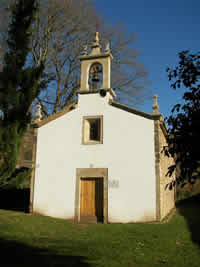
Built in the second half of the 19th century, this chapel stands in a beautiful oak wood next to the site of the Rodiño market fair, held on the second Sunday of every month. It has a single nave and is notable for its simplicity, with no ornament inside or out and the plain, undecorated walls typical of historicist architecture.
Statues: St Benedict.
Parish wayside cross
Standing on the festival ground, it has a square platform and a cubic pedestal with chamfered tops, an octagonal shaft, a moulded square capital and a lozenge-shaped cross with floral finials and a round Corpus Christi motif. All in granite.
Rodiño wayside cross
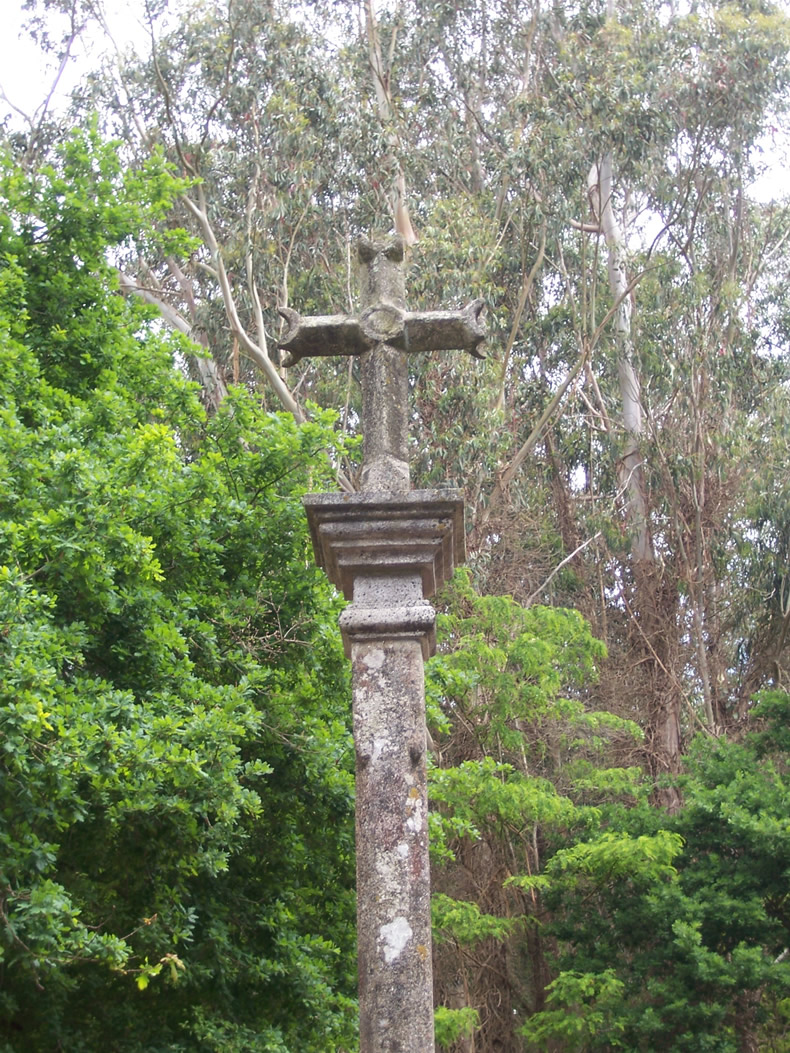
In Rodiño Grande, on the San Bieito festival ground, stands this granite wayside cross with a square platform and a cubic pedestal with chamfered tops, an octagonal shaft, a richly moulded square capital and a lozenge-shaped cross with floral finials and a round Corpus Christi motif at the centre of the arms.
Quián wayside cross
A rustic-style cross. An octagonal shaft with a small pedestal rises from stones that take the place of a platform. No capital; octagonal cross with floral finials.
Pazo de Quián (manor house)
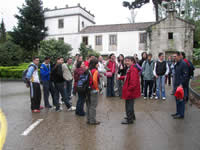
Pazo de Quián, now home to the Galician Agricultural Training and Research Centre
Once the residence of the Campuzano family, it now houses the Agricultural Training and Research Centre. A building with a battlemented tower survives, together with an attached Neoclassical chapel with a rectangular plan.
Busacos bridge
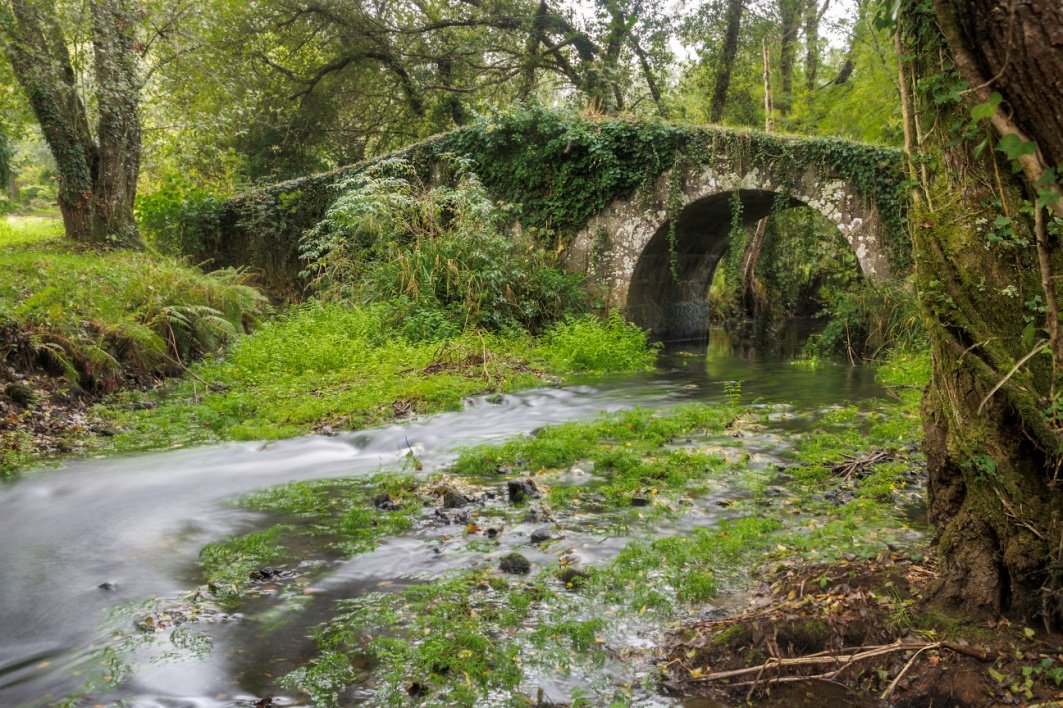
A Roman bridge at Gándara linking the municipalities of Boqueixón and Vedra. It has two arches, one round and one pointed. One of the most important pilgrim routes to Compostela crosses it: the Vía de la Plata – Camino Sanabrés.
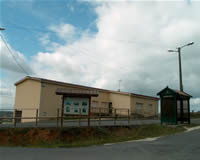
Sergude community centre