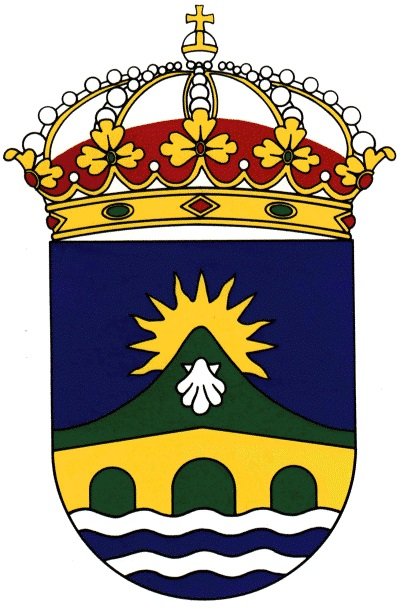
Boqueixón
This parish lies north of Pico Sacro, on a gentle slope formed by the valley facing the mountain. Fertile land with plenty of woodland, at an average altitude of 248 m, crossed by the River Pontillón. Its 267 inhabitants live in Casanova, A Eirexe, O Forte, Lamparte, Maravexás, Orto, Piñeiro de Abaixo and Piñeiro de Arriba, covering a total of 8.20 km2.
The name Boqueixón comes from the parish of San Vicente de Boqueixón rather than from a single settlement. Today the municipal seat and the town hall are in O Forte, 15 km from Santiago de Compostela.
Parish church of San Vicente
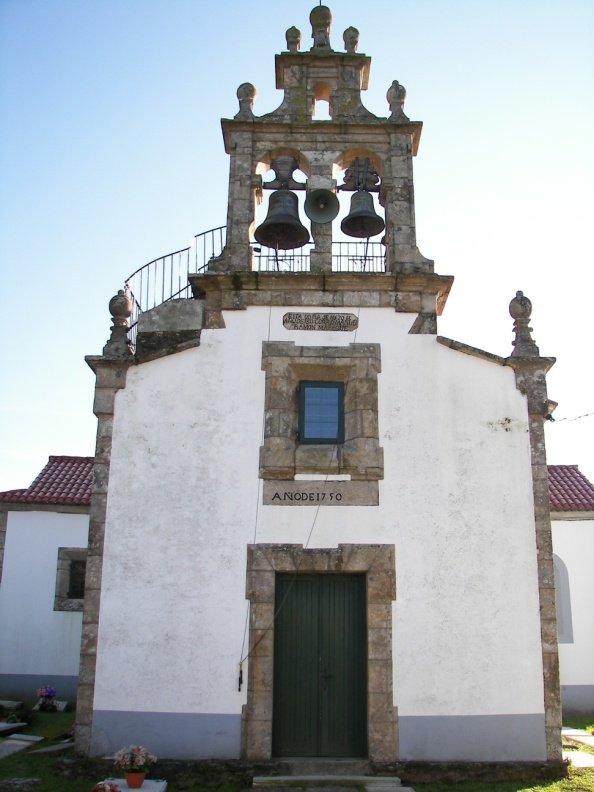
It stands in A Eirexe. The parish church was entirely rebuilt in the 18th century. In 1728 the main façade, bell tower and doors with dormer were built, all in dressed stone, at a total cost of eighty-eight reales. The interior has no decoration, emphasising its Baroque Latin-cross plan framed by pilasters. The original walls survive on the Epistle side, as do those of the Carmen side chapel, built in 1827. The exterior also keeps its façade with a bell gable whose pinnacles still recall the Baroque, even though it dates from the first quarter of the 19th century.
Inside, it is worth pausing to admire:
· Altarpieces: main altarpiece, altarpiece of the Sacred Heart of Jesus and altarpiece of Our Lady of Fatima.
· Statues: Our Lady of the Rosary, St Anthony of Padua, Sacred Heart of Jesus, San Roque, Our Lady of Fatima, Our Lady of Mount Carmel, Jesus the Saviour, St Vincent, St Joseph and Christ crucified.
Orto chapel
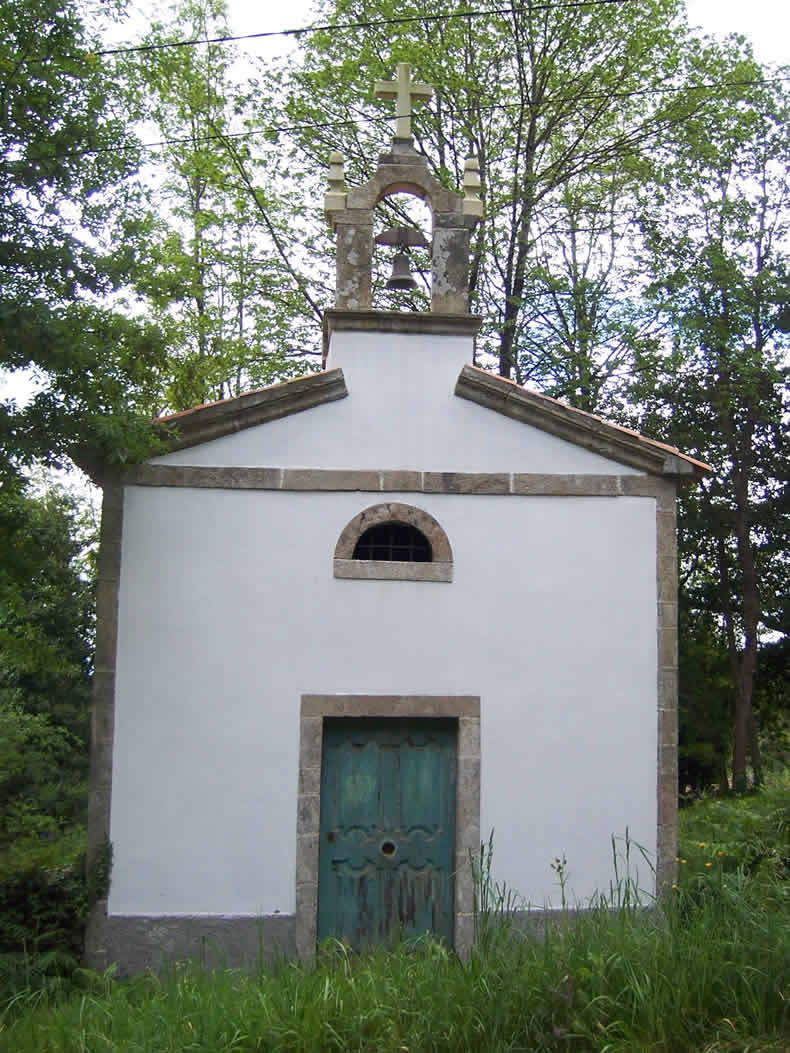
A small, simple chapel with a rectangular plan; its façade is topped by a small stone bell gable.
Orto wayside cross
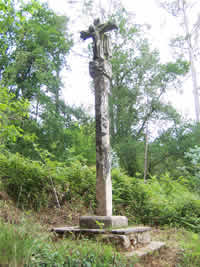
Made of granite, its square pedestal bears an inscription with the date it was made, 1647. Octagonal shaft and cubic capital with volutes carrying symbols of the Passion, a skull and crossbones, etc. Square cross with Christ crucified on the front and the crowned Immaculate Virgin on the back.
Piñeiro wayside cross
In Piñeiro, on the festival ground itself, stands this cross with an octagonal platform and a Corinthian capital with cherubs. The round cross shows Christ crucified with an angel collecting his blood on the front, and Our Lady of Sorrows on the back.
Hill fort
Very close to the church, on private land, are the remains of a hill fort; according to local legend, pottery jars full of gold coins lie among its ruins.