Ledesma
A parish bathed throughout by the River Ulla, which makes its farming and grazing land very fertile. Its location has given it an important history: a crossing point in Roman times, a priory visited by the archbishops of Compostela and the scene of fighting against the French. Its 266 inhabitants live in Ledesma, O Monte, Noente, A Ponte and Vila, covering 2.70 km2. It has good internal connections, and its western part is crossed by the AC-640 between Santiago and Vila de Cruces.
Parish church of the Divine Saviour, Ledesma
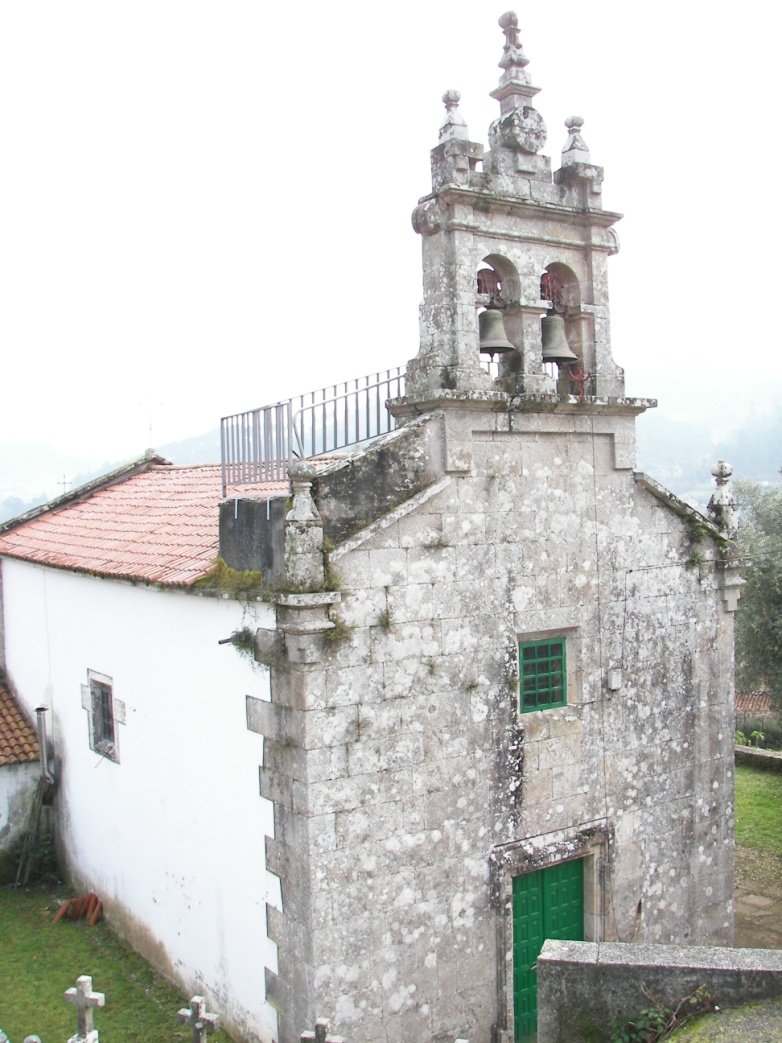
This single-nave church was altered many times in the 19th century, but keeps the walls from the major rebuilding begun in 1752. The nave has a three-sided timber roof and the chancel a barrel vault. Its façade breaks the classical pentagonal pattern, as the gable has three sides. The central part supports a single-storey square bell gable with two stilted round arches between piers, holding the bells, topped by three pinnacles, the central one on a cylinder.
· Altarpieces: main altarpiece, altarpiece of the Immaculate Conception and altarpiece of Our Lady of Mount Carmel.
· Statues: the Divine Saviour, St Joseph, Our Lady of the Rosary, San Roque, St Peter, St Francis of Assisi, Christ crucified and St Anthony of Padua.
Vila wayside cross
Square platform with a square chamfered pedestal and shaft featuring pilgrim motifs: a cross, a scallop shell, etc. Inverted truncated-cone capital with a rim. Rectangular cross with a motif of the Passion, the ladder. On the front, Christ crucified; the back has no figure.
A Ponte wayside cross
Made of granite on a recent platform, with a rectangular pedestal, octagonal shaft, Corinthian capital and rectangular cross. On the front, Christ crucified; the back has no figure.
Old bridge of Ledesma
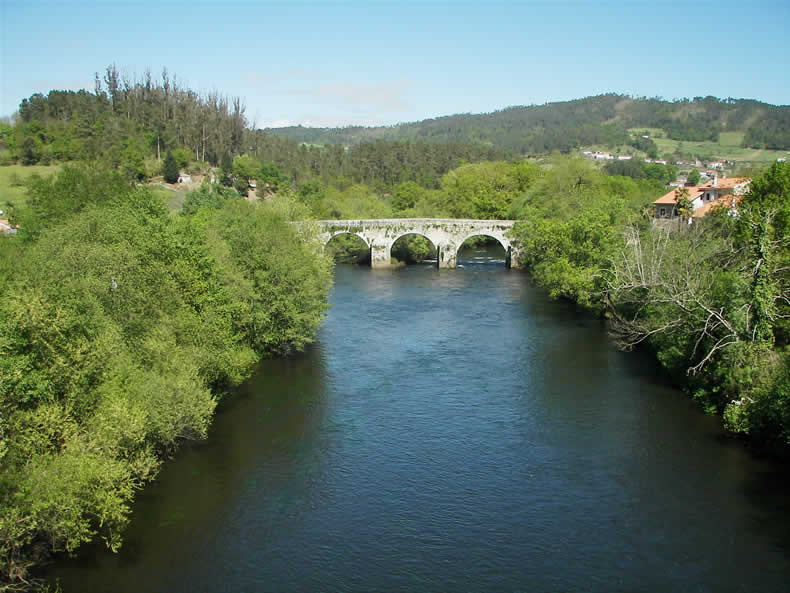
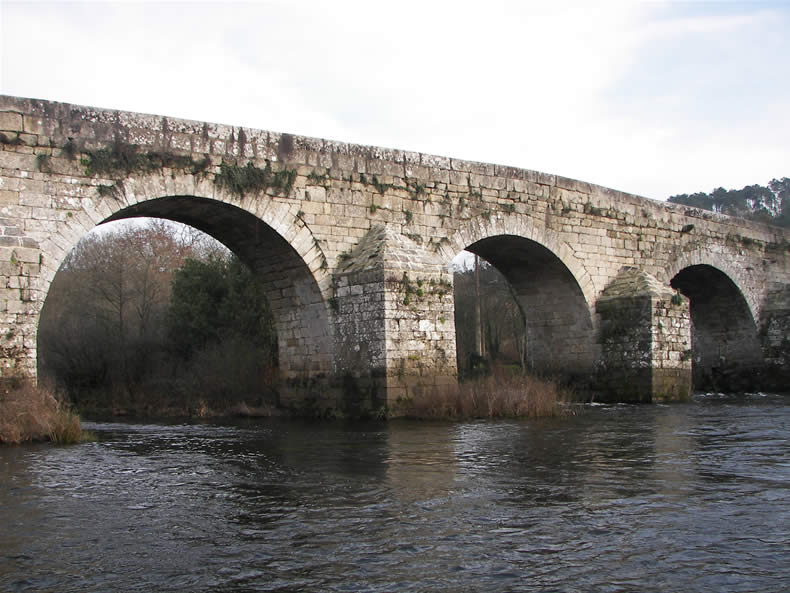
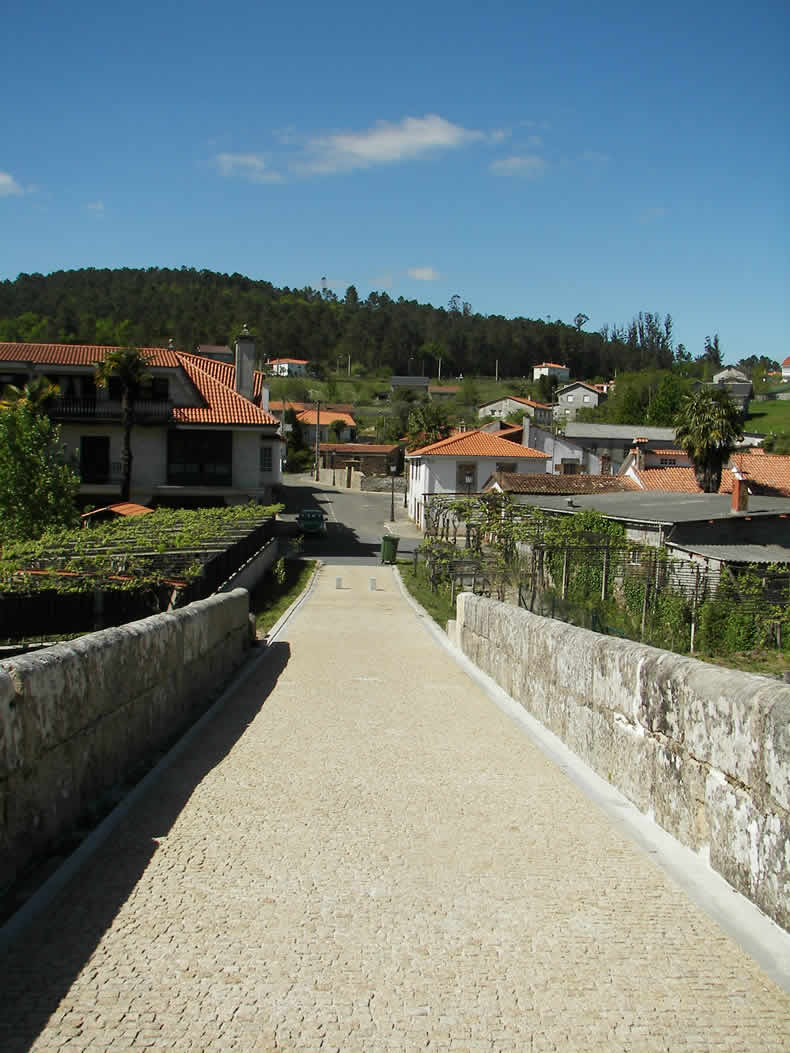
Its design and construction suggest it dates from the 16th or 17th century. Until the last century a toll was charged at its entrance. During the Peninsular War a battle was fought here against the French army by local people led by several parish priests, under the command of the Marquis of La Romana. It has nine arches, all of ashlar, resting on ashlar piers with triangular cutwaters upstream and trapezoidal ones downstream. The deck is almost level in the middle and slopes down towards each end. Swimming in the river is one more attraction of this remarkable bridge.
Gres islands
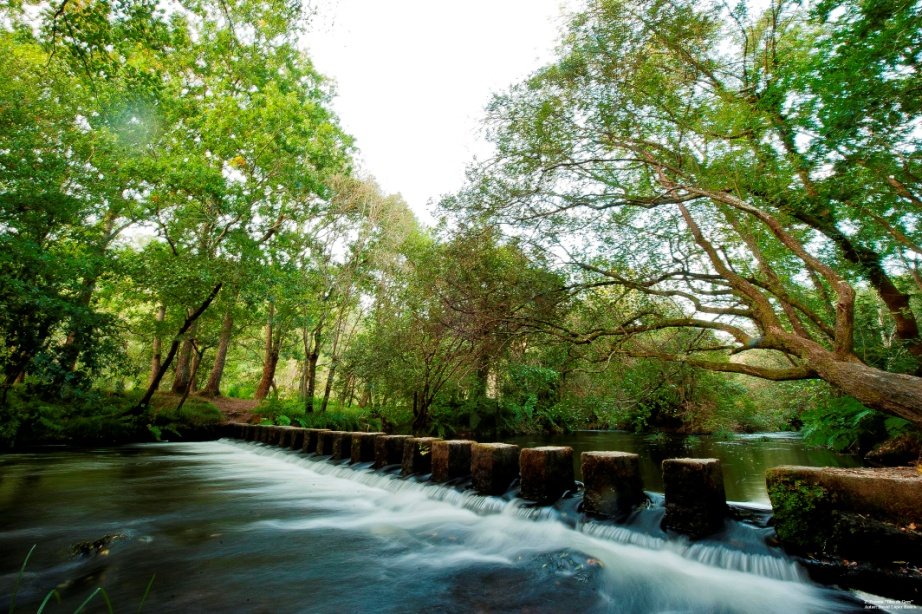
Next to the old bridge, four islands and several islets form one of the most beautiful spots in the area.