Codeso
It lies on the eastern slope of the Pico Sacro range, covering 3.10 km2 of uneven, steep ground at an average altitude of 188 m, but very green and productive. Its main activities are livestock and forestry, as well as quartz mining.
It has 365 inhabitants in six settlements: Ardesende, Casalvieito, Casaldesuso, Engas, O Outeiro and Santaia. The parish is crossed by the AC-940 Padrón–Arzúa road and by the provincial road linking Codeso with Boqueixón and Sergude.
Parish church of Santa Eulalia de Codeso
In 1881–1882, because the original church was in ruins, a new one was built following the historicist style of the time. Its façade best reflects 19th-century classicism, pared down to the limit, with straight, plain walls and no classical orders. Inside, the walls are undecorated; the only features are the Tuscan pilasters supporting the nave vault and the simple entablature running along the nave.
· Altarpieces: main altarpiece, altarpiece of St Joseph and altarpiece of Our Lady of Mount Carmel.
· Statues: Our Lady of Fatima, Immaculate Conception, St Anthony of Padua, St Eulalia, Christ tied to the column, Our Lady of Sorrows, St Francis of Assisi, St Joseph, San Paio (St Pelagius), the Child Jesus the Saviour, Sacred Heart of Jesus and San Roque.
Chapel of San Paio
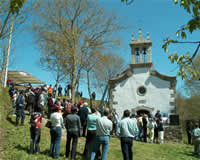
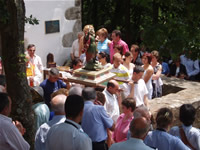
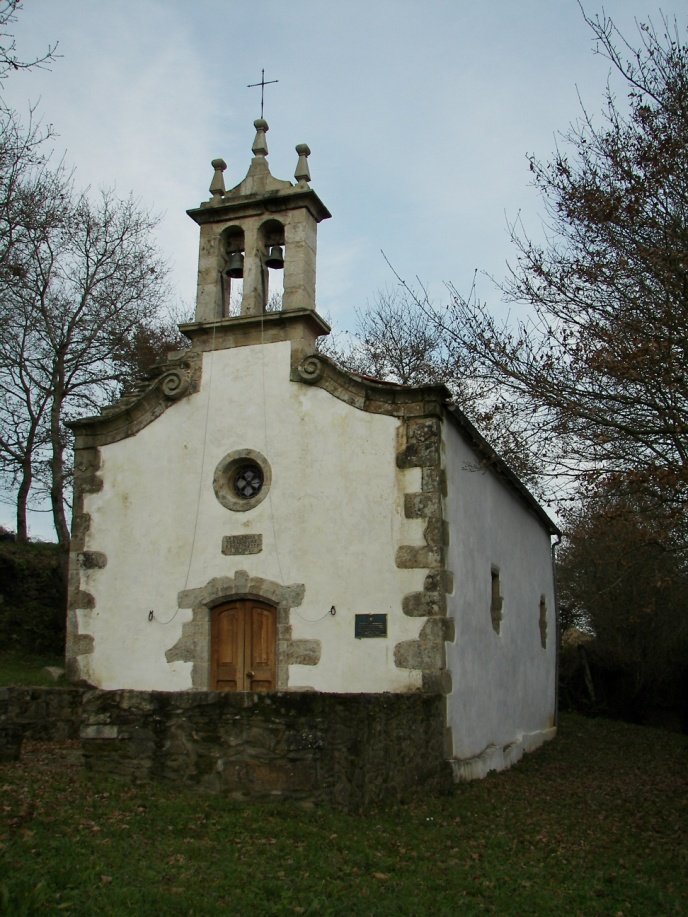
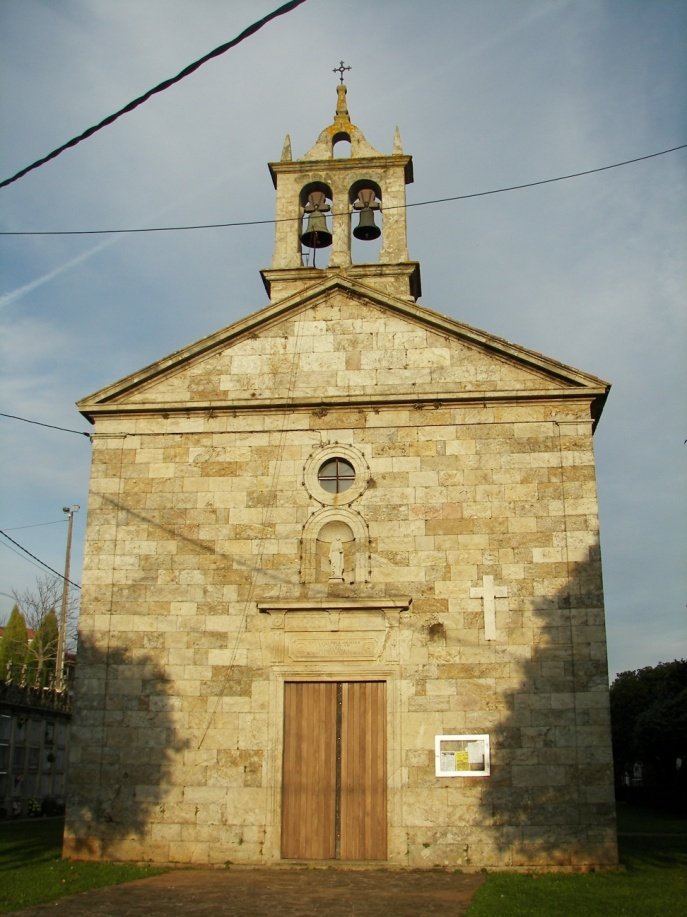
Standing on the bank of the River Pontillón, it has a rectangular nave built in the second half of the 17th century. It was fully restored by the Council in 2003, having been abandoned since the mid-20th century.
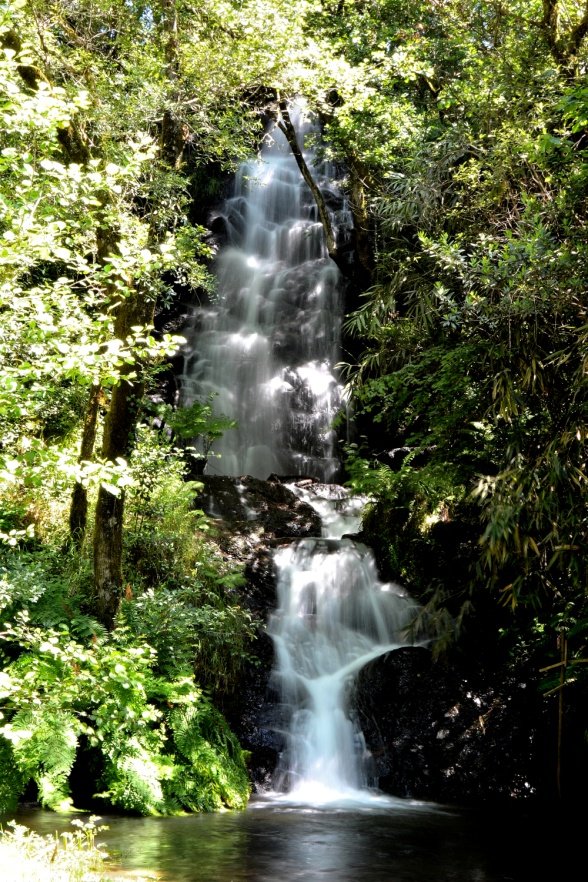
The surroundings of this chapel are perhaps the finest natural and ethnographic ensemble in the municipality, set in a lush and spectacular riverside wood. One of the walls of the churchyard holds the Fonte do Santo (Saint’s Spring), whose water, according to tradition, cures children of the “asombramento” said to be caused by cats. About 100 m from the chapel, a tributary of the Pontillón forms a spectacular waterfall in winter. A second, seven-metre waterfall lies about 300 m downstream, reached by a path that runs beside the mill race serving the local mills, several of which have been restored.
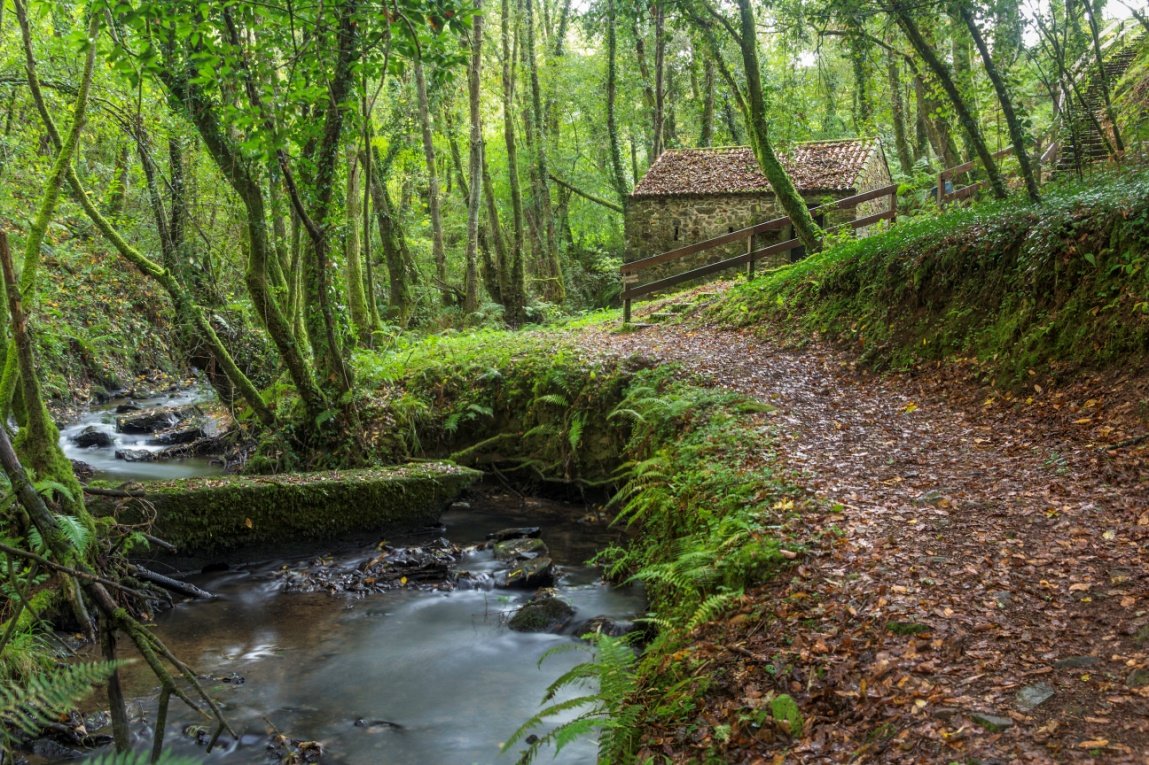
MILLS AND WATERFALL OF THE SAN PAIO CHAPEL NATURAL AREA
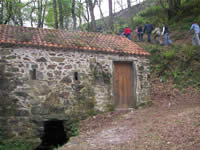
About 100 m from the San Paio chapel, a tributary of the River Pontillón forms a spectacular waterfall. A second, seven-metre waterfall lies about 300 m downstream, reached by a path that runs beside the mill race serving the local mills. Two restored mills can also be seen in this natural area.
Ardesende wayside cross
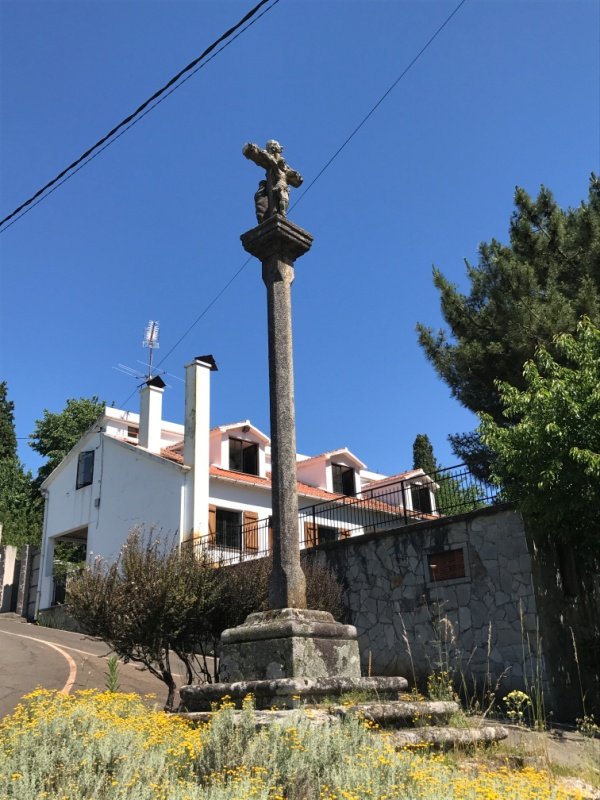
Made of granite, it has a square platform with one step, a cubic pedestal with a moulded top, an octagonal shaft, a square capital with a hollow moulding and a lozenge-shaped cross.
A Igrexa wayside cross
With a square platform and pedestal topped with a torus moulding, a moulded square capital and a round cross showing Christ crucified on the front and the crowned Immaculate Virgin on the back. Made of granite.
Casa Grande de Romay (manor house)
In Engas, it was once the home of military men and still belongs to the same family. Notable features are its wooden hórreo on stone pillars and an old round dovecote.
Casa Grande de Balado (manor house)
In Ardesende, in good condition. The earliest known references to it date from 1693.
Casa de Matelo
In O Outeiro; the first references to it date from around 1702 and are linked to the Matelo mill. In poor condition.
“Pena do Corvo” viewpoint
At 337 m, it offers a beautiful view over the Gundián gorge (Ponte Ulla). Legend has it that somewhere on the Pena do Corvo there is an undiscovered goat’s hoofprint with gold beneath it.
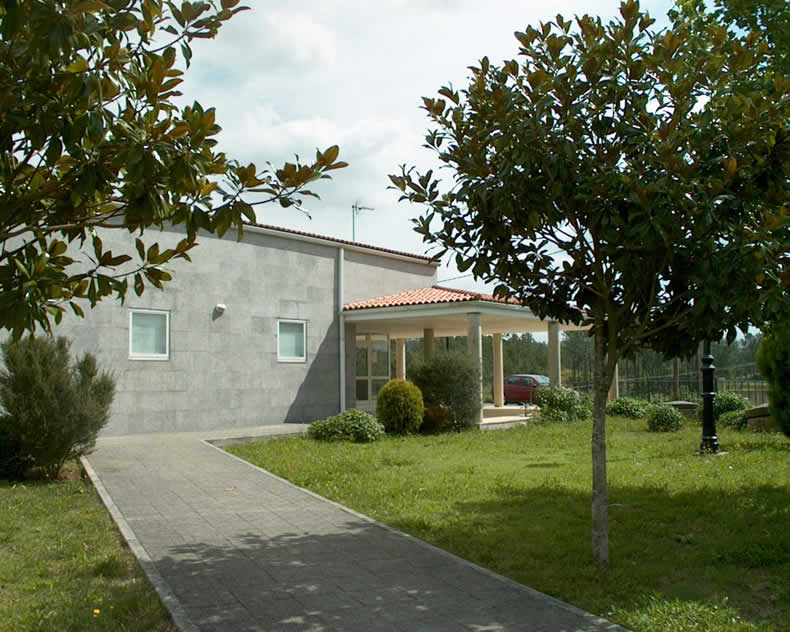
Codeso community centre